
CRITICAL LEGAL THINKING
LAW AND THE POLITICAL
CRITICAL LEGAL THINKING
LAW AND THE POLITICAL

Microtonal Jurisprudence
This is not a music review. It’s a proposal for a jurisprudential methodology that takes its organising metaphor from music theory but its critical object from law's refusal to register what its own categories cannot hold. In 2017, the Australian psyche-rock band King Gizzard & the Lizard Wizard released Flying Microtonal Banana. To make it, the band had a friend modify a guitar to play in 24-TET tuning, in the style of a bağlama, dividing the octave into twenty-four equal intervals rather than the standard twelve, and then gave every band member four hundred Australian dollars to do the same to their own instruments. The result was an album that, by the band's own account, gave them something new, “fresh and exciting”. The band’s frontman, Stu Mackenzie, described the music as, “between other notes, and it just sounds different, and it’s blowing my mind.” The challenge was not simply technical, it was epistemological: how do you make audible a set of intervals that the dominant…


ARTICLES

‘After’ the Rojava Revolution? Rethinking Political Hope in a Post-Autonomy Syria
Since early 2026, Rojava in North East Syria, has been under renewed assault by the new Syrian regime. A majority-Kurdish region, Rojava has, for more than 12 years been home to one of the world’s largest experiments in democratic autonomy and ecological living. The…

Iran and the ‘state of exception’
It seems that we have entered a period of endless war. The undeclared American war "Epic Fury" (the name of the attack on Iran) and Israel's new murderous campaign has replaced the "cosmopolitan order of rules" heralded by those who saw the "end of history" after the…

Emilios Christodoulides 1963–2026
It is with the greatest sadness that wish to inform you that our comrade, colleague, friend and amazing intellectual, Emilios Christodoulides, passed away yesterday. After a long illness that tormented him for the last two years, he passed away peacefully in…

The Diapausal Life of International Law: Gaza and Beyond
Few contemporary conflicts have been as saturated with legal language as Gaza. Provisional measures issued by the International Court of Justice, arrest warrants sought by the International Criminal Court, findings by United Nations commissions of inquiry, emergency…
Normopathy Today: Norms Behaving Badly
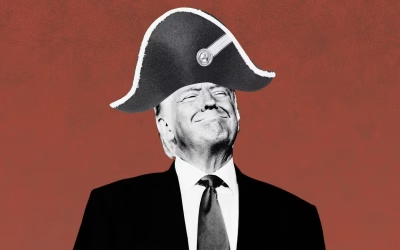
It is clear now, one-year into the second coming of Donald Trump, that the normative international order in place since World War II has been breached. Trump recently pronounced that he doesn’t need to follow international law because all that counts is his “own…

Analysing the Iranian Uprising: Costas Douzinas interviews Leila Faghfouri Azar
This interview, conducted by Professor Costas Douzains for the Greek weekly newspaper Epohi, features Dr. Leila Faghfouri Azar and was originally published in Epohi’s special supplement on the Iranian uprising (24–25 January 2026). In the conversation, Faghfouri Azar…

One’s own morality as the highest court: A variation on Hegel’s concept of international law
Whether international law constitutes an independent legal domain endowed with sanctioning power with regard to its subjects is a question that has resurfaced in nearly every crisis that has emerged within the post Cold War new world order, and one that has most…

Iran’s Uprising: Between Clerical Violence and Neo-colonial Aggression
The beginning of 2026 marked yet another human tragedy for Iranian society. In January, hundreds of thousands of Iranian protesters took to the streets in over 100 cities in response to political repression and growing socio-economic hardships. This new wave of…

Greenland and the Spectre of Dispossession
When it came to grabbing territory, the British had effective techniques by the 1960s. Morning-tea at Downing Street could accomplish what a U.S President’s incontinent media posts have been threatening to do with much froth and fury since 2019. The creation of the…

Greenland between a Rock and a Hard Place
Amid US President Trump’s looming take-over of Greenland and attempted coercion of Western allies to agree to this, Western liberal international lawyers and commentators are busy reaffirming Danish sovereignty over the territory. However, an anti-colonial…

Militant Democracy as Neurosis
Walter Benjamin invites us to think language in a radically different way: not as a neutral medium of communication, but as something living, something creative. For him, language is not exclusively human: everything that exists speaks. It may do so through gesture…

Cadaverous Tranquillity: Proscription, Anticipatory Repression and Coleridge
In December 1795, William Pitt’s government introduced the Treasonable Practices Bill and the Seditious Meetings Bill—the “Gagging Acts” as their opponents called them. They were designed to suppress the radical democratic societies that had flourished in the wake of…

Gaza, Venezuela and International Law
1. After the genocide in Gaza, we did not expect 2026 to be a year of peace. The biggest desire of Trump, "the great peacemaker," was to win the Nobel Peace Prize. But his first statements after the attack on Venezuela and Maduro's abduction show that the peacemaker…

Rage Against the End of International Law: From Venezuela to the Global
In a recent piece published at Opinio Juris, Nikolas M. Rajkovic calls on international lawyers to recalibrate their “ways of seeing” to account for the multi-scalar, relational, and interconnected nature of contemporary authority and power. His article invites a…

Why Human Rights fail Global Southern Women
Following a tumultuous start to her role as first lady of the United States of America, wherein she was accused of destroying ‘family values’ and promoting ‘militant feminism’, Hillary Clinton delivered a much-lauded speech condemning Chinese abuses of human rights…

Rap vs. The State (in a time of genocide)
We know the genocide in Gaza is a collective work, a sort of F35 genocide whose parts come from an imperial collective, a collective of old colonial states now led by the USA. So the denial of genocide, at least of its naming, is also shared by these states across…

A Preliminary Report on the Academic Office of Principal and Vice Chancellor
On 26 June 2025, Prof Iain Gillespie publicly accepted that he was ‘incompetent’ in his execution of the office of Principal and Vice Chancellor of the University of Dundee. The surprise revelation of a roughly £30 million deficit at the Scottish university in…

Discretionary Symbolism: An Analysis of Trump’s Policies for Latin America and Beyond
The international policies of the second Trump administration have caused quite an upheaval. From raising trading tariffs to (supposedly) ending wars efforts – while at the same time bombing small boast and sanctioning judges, it has not been easy to understand it.…

The Gaza Tribunal: A Simulacrum of Justice
The contemporary discourse on genocide is dominated by international criminal law, designed to punish individuals after the fact. Yet the framework derived from Public International Law and the Genocide Convention’s founding purpose was not punishment but prevention.…

Blog Carnival: Discussing the Aesthetics and Counter-Aesthetics of International Law
In her review of Aesthetics and Counter-Aesthetics of International Justice, Isobel Roele mentions the use of ‘reverse-engineering’ as a method of counter-aesthetics. Sofia Stolk’s contribution to Aesthetics and Counter-Aesthetics of International Justice, the first…
Blog Carnival: Sounding Justice
The sound of the spoken word rising, pausing, the rhythms of the lines, of the stanzas, of the silences, the poem verbalised. The images etched on the walls in black and white, comics, graphic novels, stretching across wall after wall, winding around the room. The…


