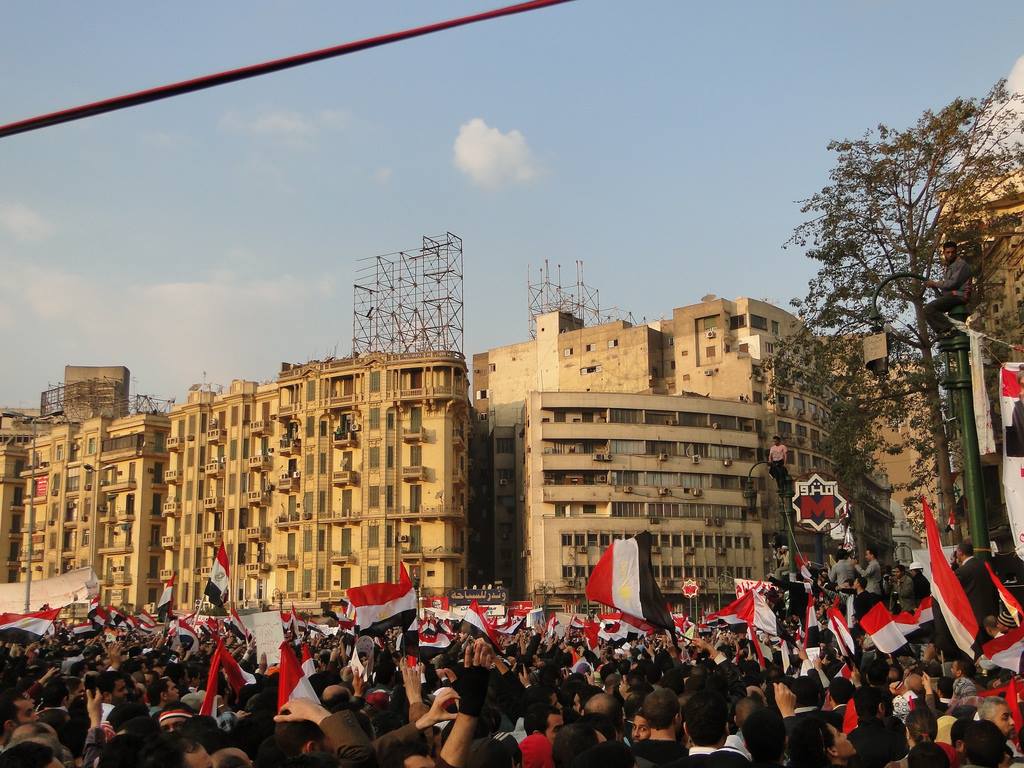
The School of Law, SOAS, cordially invites you to the symposium on Law, Politics and Constitution-Making in the Arab Spring.
When: 20 March 2015, 15:25–19:00 Where: Khalili Lecture Theatre, SOAS, University of London, Russell Square, London, UK
Welcome Notes
Dr. Nimer Sultany, Law Department, SOAS
Professor Matthew Craven, Dean, Faculty of Law & Social Sciences, SOAS
15:30 – 17:00
Panel I: Whose Constitution?
Professor Mohamed Fadel, Toronto Law School, Constitutionalism, Democracy and Political Division: the Virtues of a Modus Vivendi
Dr. Nadia Marzouki, European University Institute, The Politics of Compromise from the Constitutional Debate to Elections
Hedayat Heikal, Harvard Law School, The Puzzle of the Persisting Faith in Constitutionalism
Discussant: Dr. Scott Newton, Law Department, SOAS
Moderator: Professor Mashood Baderin, UN Independent Expert on the situation of human rights in the Sudan;Law Department, SOAS
17:30 – 19:00
Panel II: The Politics of Rule of Law
Hossam Bahgat, Journalism School, Columbia University, The State of Human Rights in Post-Revolutionary Egypt
Dr. Adam Hanieh, Development Studies, SOAS, ‘State-Building’, Economy and the Rule of Law
Dr. Afaf Jabiri, SOAS, Gendering the Arab Revolutions: Women’s Rights and the Challenge of Insecurity
Discussant: Professor Nadje Al-Ali, Center for Gender Studies, SOAS
Moderator: Professor Lynn Welchman, Law Department, SOAS
Ticket prices:
£10 standard ticket
£5 student ticket
Free for SOAS students and staff
Over one billion individual globally experience land or property rights related insecurity. For countless poor households in the Global South, land appears the sole valuable asset as well as the principal source of their livelihood besides frequently being the only…
All over the globe, reproductive health and rights are in constant dispute. In recent years, it has been possible to notice a major shift in some countries toward advanced recognition and access to reproductive rights (e.g. Argentina, Ireland and Colombia’s…
The minimum wage is a state mandated lower limit on wages that can be paid to any employee in the jurisdiction of the state. This governmental lower limit on wages effectively sets a living standard. This standard is heavily implied (but not actually guaranteed) to…




0 Comments