
CRITICAL LEGAL THINKING
LAW AND THE POLITICAL
CRITICAL LEGAL THINKING
LAW AND THE POLITICAL

What we are reading… Jessica Whyte and Máiréad Enright
Adania Shibli, Minor Detail. Trans. Elisabeth Jaquette. (Fitzcarraldo Editions, 2020) Adania Shibli’s Minor Detail is a novel made of two stories of violence and domination, separated by more than six decades. In the first, set during the Palestinian Nakba, a terrible crime is committed against a girl by soldiers sent to ‘cleanse’ the Negev of remaining ‘Arabs’. This ‘incident’, the Palestinian narrator of the second story notes, is the kind that ‘happens so often that I’ve never paid them much attention before.’ Yet, she does pay attention to this one because of a ‘minor detail’: it took place exactly twenty-five years before her birth. As she begins an obsessive quest to discover the truth of this ‘incident’, she crosses borders—‘military ones, geographical ones, physical ones, psychological ones, mental ones’. With the aid of a Jerusalem ID card borrowed from a colleague, she travels across the Qalandia checkpoint from Ramallah in a rented car, guided by two maps, one populated…


ARTICLES

The Inhuman as the Human
The second roundtable of the Law and the Inhuman workshop was entitled ‘The Inhuman as the Human’, and was curated and chaired by Afshin Akhtar-Khavari. The two speakers were Matilda Arvidsson and Connal Parsley. Afshin Ahktar-Khavari: In this roundtable we focus our…

The Inhuman in the Human
The first roundtable of the Law and the Inhuman workshop was entitled ‘The Inhuman in the Human’, and was curated and chaired by Kathleen Birrell. The two speakers were Daniel Matthews and Scott Veitch. Kathleen Birrell: In this roundtable, we engaged with the…

Law and the Inhuman: Introductory remarks
On 8 April 2024, the workshop ‘Law and the Inhuman’ took place at Tilburg Law School (TLS), in the Netherlands, convened by Marie Petersmann, Julia Dehm, Kathleen Birrell and Afshin Akhtar-Khavari. The workshop gathered ten speakers from different disciplines, who…

Foucault: Power
If there are a number of terms in the lexicon of contemporary critical social, political, and legal thought that one cannot go about without invoking the name of Michel Foucault, “power” is definitely one of them—despite Foucault’s later protestations that the…

Kerstin Anér, Pioneering Thinker of Data Power – Towards A Critical Reimagining the History of Data Law and Policy
Questions of data, law, feminism and the environment are not new, and contrary to popular perceptions, were not discovered as a field of critical thought by contemporary scholars. These debates were already taking place in national and international fora in the 1960s…

Elimination in Settler Colonialism
Since October, the world has watched in real time the transformation of Gaza from a concentration camp into a killing field. Besieged by land, air, and sea, Palestinian men, women, and children are now subject to a historically unprecedented program of mass…

Live and let live: the mythological projection of police in the killing of Chris Kaba
Continuing our responses to A Philosophical History of Police Killing, today we bring you Carson Arthur's response to the book. In the UK, we are seeing the attempted rewriting of ‘police accountability.’ This in response to the prosecution and in preparation for the…

Are the Police Anarchic?
Following the publication of Melayna Lamb's superb book A Philosophical History of Police Power, we have asked James Martel and Carson Arthur to respond to the book. Today we bring you James' response. Melayna Lamb’s A Philosophical History of Police Power makes the…

The Colonial Breach and the Colonial Bind
Reposted from Interregnum. Whatever the contentions on the term we use to express the scale and method of killing we are witnessing in Gaza, the description at the International Court of Justice as a 'live-streamed genocide' is both apt and particular to our age. For…

Robert Michels’ Lessons for the Left
Tim Christiaens In the early 2010s, many people on the left proclaimed the death of state-based socialism, the political party, and any kind of organizational authority. From Occupy Wall Street to the Arab Spring, the 2011 revolts put their faith in horizontalist…

Gaza Genocide: An Introductory Critical Legal Reading List
We asked Jessica Whyte, Goldie Osuri and Marina Velickovic to put together a resource pack of the most important critical (legal) work on the on-going Gaza Genocide. We hope this will be of use in teaching, researching and generally understanding the terrible events…

Questioning our Need for Punishment
Henrique Carvalho & Anastasia Chamberlen The philosophy of punishment finds itself at a crossroads. On the one hand, it remains a very prolific and popular field of study, with countless works being regularly produced and revisited. On the other hand, most of the…

Collective Well-Being as Resistance: Garment Workers against Racial Capitalism
Nanak naam, chardi kala, tere bane sarbat da bhala. I say these words by way of normalising a Sikh consciousness and vocabulary. The words appear at the end the Ardas, one of the Sikh prayers that is part of ritualistic daily practice. I am not quoting them here to…

Yiddish songs of struggle and resistance: resources for our times?
These times are horrific beyond words. In January the International Court of Justice found it to be plausible that the State of Israel is committing genocide in Gaza. At the time of writing over thirty-three thousand Palestinians – including over thirteen thousand…

Palestinian Workers’ Resistance in the Age of Neoliberal Settler Colonialism
The Israeli settler government, conducting a genocidal war against Palestinians in the Gaza Strip since October 2023, has taken steps to prevent Palestinian workers in Israel and settlements from the West Bank and Gaza Strip from reaching their jobs, and has urgently…

Workers Against Imperialism: Resistance in Palestine, Britain and Beyond
On 25 March 2024, Francesca Albanese presented ‘An Anatomy of Genocide’, her report to the UN Human Rights Council as the Special Rapporteur on the situation of human rights in the Palestinian territories occupied since 1967. The report describes an ‘intentional…

Clickbait Capitalism – Or, The Return To Libidinal Political Economy
Republished from Progressive Political Economy: Last year I published an edited volume called Clickbait Capitalism. The title came as a surprise, even to me. The book was meant to be called Libidinal Economies of Contemporary Capitalism. No one was interested in the…

International law and failure in the context of Gaza
A few days ago a discussion developed on Twitter (as these things do) about whether Gaza (and specifically the failure to prevent or halt the ongoing genocide) signals a failure of international law. Many of the responses seemed to be saying a similar thing, mainly…

What was the Anthropocene?
Apparently, we might no longer live in the Anthropocene. Such was the result of a formal vote by the Subcommission on Quaternary Stratigraphy of the International Commission on Stratigraphy (SQS), issued on the 5th of March 2024, who oversee and administer 4.5…
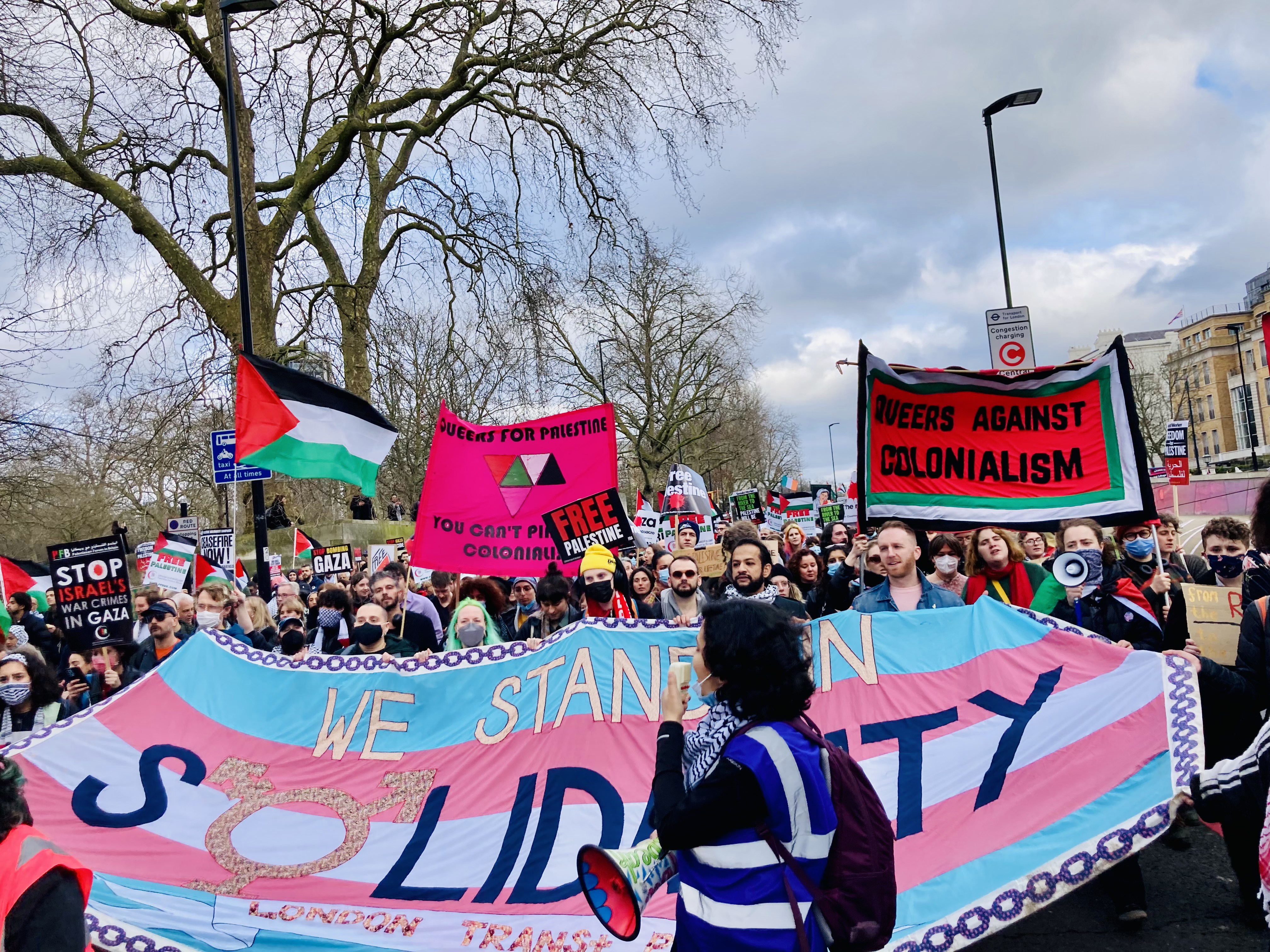
The uses of Marxist theory of law during a genocide
This was originally a talk, prepared for the Pashukanis @100 conference, with an afterword post-ICJ interim order of 26 January 2024. In some ways it is ironic and in other ways entirely appropriate that the Pashukanis @100 event falls on the very days that South…

What Taylor Swift Taught me about Fascism
Reposted from Unemployed Negativity: Years ago I remember encountering Félix Guattari's little essay, "Everybody Wants to be a Fascist." At the time its title seemed more clever than prescient. (Although it is worth remembering how much fascism, and the encounter…


