
CRITICAL LEGAL THINKING
LAW AND THE POLITICAL
CRITICAL LEGAL THINKING
LAW AND THE POLITICAL

Greenland and the Spectre of Dispossession
When it came to grabbing territory, the British had effective techniques by the 1960s. Morning-tea at Downing Street could accomplish what a U.S President’s incontinent media posts have been threatening to do with much froth and fury since 2019. The creation of the British Indian Ocean Territory (BIOT) by detaching the Chagos Archipelago from Mauritius was secured when the Mauritian premier Sir Seewoosagur Ramgoolam met Sir Harold Wilson, Britain’s Labour Prime Minister, one morning in 1965. The dispossession of the Chagossians should now serve as a cautionary tale for Greenland, and also cause us to question the primacy being attributed to NATO’s security in current political posturing. In what follows I argue that Greenland, like the Chagos Archipelago, might find itself dismembered and carved up to serve the security interests of Europe. The path to dispossession is being built on the fallacy that the Arctic zone presents a security threat to the U.S and Europe. The true peril…


ARTICLES

After the Indignation: A Speech from within the Spanish Resistance
Last 25S (25th of Sept) we called to surround the Congress of the members of parliament to rescue it from the kidnapping of the popular sovereignty carried out by the Troika and the financial markets. An occupation executed with the consent and collaboration of most…

LIBOR (and other mythical beasts)
Martin Wheatley, British financial regulator charged with solving the LIBOR crisis, has returned from his Crusade carrying, we are told, a splinter of the True Cross which he assures us is capable of procuring miracles. Not common or garden miracles involving the…

Interview with ‘Bifo’: Reactivating the Social Body in Insurrectionary Times
David Hugill and Elise Thorburn [1] have kindly agreed to publish this extended dialogue with the Italian Autonomist Marxist theorist Franco Berardi - known as 'Bifo'. It has just been released in the Berkley Planning Journal as part of an excellent special issue on…
The sacred dilemma of inoperosity. On Giorgio Agamben’s Opus Dei
With this book, the journey Agamben began with Homo Sacer seems to have come to an end. It was a long road, from the early ‘90s until today, nearly twenty years. An archeology of ontology conducted (with a rigor that not even the bizarre and misleading game of little…

Interview with leader of the Greek Syriza Party: ‘The Euro is a Powder Keg that is Going to Explode!’
Euro or no euro. That was the grand dilemma in which Greece, and in particular, the Syriza movement that you lead, was framed. How do you analyse the period of crisis that Europe is currently undergoing, and which seems to put in question much more than the sacrosanct stability of the euro?
I believe the European model has to be rebuilt from below. We can’t be satisfied with what today is called Europe. The current crisis is not a European crisis but a global one. Europe today does not have the mechanisms to confront it or control the worldwide financial attack against its peoples. Hence why Europe became a continent where the attack of the global financial system was ferocious. We have no defences.

Impressions of the Critical Legal Conference 2012
The Critical Legal Conference (“CLC”) 2012. I thought I’d leave it until a week after the event, to allow time for the dust to settle, before reflecting on the connections between the diverse papers, the intense conversations and my own theoretical preoccupations. It…
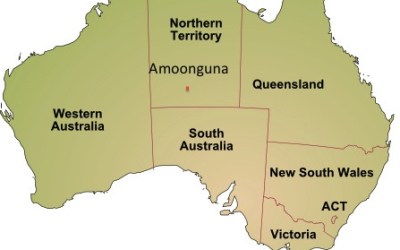
Australian government asked to leave aboriginal community
Just over five years ago, on 21 June 2007, Australia’s then prime minister John Howard announced that rates of child sex abuse in the country’s Northern Territory aboriginal communities were so high that they constituted a national emergency. Drawing on the federal…

No Home for Squatters’ Rights: Limitations and Legitimated Violence
As of 1 September 2012, under Section 144 of the Legal Aid, Sentencing and Punishment of Offenders Act 2012 (“LASPOA”), it became illegal in England and Wales to squat a residential building. Despite the fact that displacing someone from a building that had obvious signs of being their home without the permission of the legal owner has been illegal since the Criminal Law Act 1977, the necessity for a duplicate law just goes to demonstrate the accelerated deification and reification of individual property rights, over the social utility and sharing of resources held within the philosophy and practice of squatting. This recent shift in media-aggravated legislative change is a definitive move further in favour of the landowner as opposed to those who have no land, and those who support the redistribution of land.

From the White Overalls (Tute Bianche) to the Book Bloc
It seems a century has gone by since the political season of the Tute Bianche (White Overalls), but it was only a little over ten years ago. Ten years in which much has happened. Despite the historical shifts that have taken place in these past ten years, rebellious…

When capitalism is defended with legitimate violence
It has been a long fortnight for South Africa, which has unmistakably shown all the flaws and fallacies of its post-apartheid ‘rainbow nation’, along with the weaknesses of a non-racialist society deeply riddled with economic and social asymmetries. More importantly…

Returning to Tiqqun: Final Warning to the Imaginary Party Regarding Public Space
Public space is intended for the exchange and circulation of commodities. Like all other commodities, people may move about freely within it. Article 2: Public space is space that belongs to no one. What belongs to no one belongs to the State. The State grants to…

Judith Butler: ‘I affirm a Judaism that is not associated with state violence’
Yesterday (the 26th of Aug) the Jerusalem Post published an attack on the awarding of a major international prize to Judith Butler, the philosopher and Berkeley professor of comparative literature, because Butler favors boycotting Israel. Butler wrote this response…

Austerity by way of the Colonies: Workfare in the UK
The taxi took an alternate route to the airport that day, the day before the Queen’s Jubilee parade, to avoid the very early morning rehearsals of military personnel, horses, and others involved in orchestrating the impending celebrations. Arriving at my destination…

Galloway on Rape and Law’s Own Repugnant Diatribe
On August 18th, the youtube channel ‘molucca Red,’ ‘[t]he only fully authorised GG channel,’ posted ‘Good night with George Galloway (Episode 5).’ This episode featured Galloway discussing various issues relating to the Wikileaks founder Jullian Assange. In watching…

Health, Safety and Publicness: Athens, August 9–14, 2012
Five days in Athens. Five very varied days. I used to frequent Athens as a teenager with my parents. We were always transit visitors, en route to Kano, Nigeria where my late father used to work. Those visits where quick, two days in Athens, visiting ancient…

Pussy Riot: Maria Alyokhina’s Closing Statement
How has this happened that our performance being initially a small and somewhat awkward act has grown into a big disaster? Obviously in a healthy society that is impossible. As a state, Russia has long been akin to an organism ill to its core. And this morbidity…

The True Blasphemy: Zizek on Pussy Riot
Pussy Riot members accused of blasphemy and hatred of religion? The answer is easy: the true blasphemy is the state accusation itself, formulating as a crime of religious hatred something which was clearly a political act of protest against the ruling clique. Recall…

Jakob Böhme: The Tragedy of Freedom and the Curse of the Law
Put' in Febraury 1930. It seems to have been written as a tangential reaction to a reading of Koyré's La Philosophie de Jacob Boehme, which Bedyaev reviewed in 1929. While Berdyaev's concerns appear to be primarily confessional - he places Boehme's mix of Lutheranism…

De Gandillac’s Cusanus: Order of Justice and Nexus of Love
As Nicolaus Cusanus' thought developed from the ground-breaking Docta Ignorantia one can detect that movement that each thinker must make as they pass to the limit, and pass right through. In the following selection, Maurice de Gandillac shows us how Cusanus (here de…

Cusanus on the Just at the Limit
To see the debt of Nikolaus von Kues (Nicolas Cusanus, Nicolaus de Cusa) to Meister Eckhart, it perhaps suffices for the casual reader to compare yesterday's post here to the selection translated below, this being the primary purpose of presenting the two texts…

Eckhart on the univocity of justice and equivocity of the just
The following selected extracts from Meister Eckhart’s extremely fecund Expositio sancti Evangelii secundum Iohannem have been picked because, while ostensibly working through the difference between justice and the just, they do so using theoretical tools of…
KEY CONCEPTS
No Results Found
The page you requested could not be found. Try refining your search, or use the navigation above to locate the post.
SERIES / SYMPOSIA
No Results Found
The page you requested could not be found. Try refining your search, or use the navigation above to locate the post.